Book Appointment Now
Number of Baby and Permanent Teeth | Complete Guide by Dr. Mohamed Fahmy
Every child is born without visible teeth, yet hidden beneath the gums lies the foundation for a lifelong smile.
Understanding the number of baby and permanent teeth helps parents follow their child’s oral-development milestones and recognize when it’s time for a dental visit.
In this detailed guide, we explain everything you need to know, from the total number of teeth in each stage to eruption timelines, molar count, and essential oral-care advice.
Table of Contents
What Are Baby Teeth?
Baby teeth (also called primary teeth or milk teeth) are the first set of teeth to erupt in a child’s mouth.
They are temporary but crucial for healthy chewing, speech, and jaw development.
Functions of Baby Teeth
- Aid proper chewing and digestion
- Help pronunciation and speech formation
- Preserve space for permanent teeth in the jaw
- Shape the child’s face and smile
Caring for baby teeth is vital, neglect can affect the health and alignment of future permanent teeth.
How Many Baby Teeth Do Children Have?
Children have 20 baby teeth, equally divided between the upper and lower jaws:
| Tooth Type | Per Jaw | Total |
| Central & lateral incisors | 4 | 8 |
| Canines | 2 | 4 |
| First molars | 2 | 4 |
| Second molars | 2 | 4 |
| Total | — | 20 teeth |
Eruption usually begins around 6 months and finishes by age 3, though timing can vary based on genetics and nutrition.
Baby Teeth Eruption Timeline
| Tooth Type | Average Eruption Age | Notes |
| Lower central incisors | 6–10 months | First to appear |
| Upper central incisors | 8–12 months | Follow soon after |
| Lateral incisors | 9–13 months | Commonly paired |
| First molars | 13–19 months | Start the chewing phase |
| Canines | 16–22 months | Important for speech |
| Second molars | 23–33 months | Last to erupt |
A full primary set (20 teeth) is typically complete by age 3.
When Do Permanent Teeth Appear?
Around age 6, baby teeth start falling out as permanent teeth emerge.
This phase, called the mixed-dentition stage, lasts until about age 12–13 when the child’s permanent smile is nearly complete.
The first permanent teeth are usually the lower central incisors and the six-year molars behind the baby molars.
Number of Permanent Teeth
Adults have 32 permanent teeth, but children and teens typically have 28 before wisdom teeth erupt.

| Tooth Type | Per Jaw | Total |
| Incisors | 4 | 8 |
| Canines | 2 | 4 |
| Premolars | 4 | 8 |
| Molars (excluding wisdom teeth) | 4 | 8 |
| Wisdom teeth (third molars) | 2 | 4 |
| Total | — | 32 teeth |
So when you hear “number of teeth 28,” it refers to the count before wisdom teeth appear in adulthood.
Number of Molars in the Mouth
| Stage | Molars per Jaw | Total Molars |
| Baby teeth | 4 molars (2 each side) | 8 |
| Adults (before wisdom teeth) | 8 molars + 8 premolars = 16 | 16 |
| Adults (with wisdom teeth) | 6 molars per jaw | 12 |
Wisdom teeth (third molars) usually erupt between ages 17–21, though some people never develop them and this is completely normal.
When Does the Third Molar Appear in Children?
The term “third molar” can mean different things:
- Second baby molar (sometimes called the third tooth in a sequence) erupts around 24–33 months.
- The true third molar (wisdom tooth) emerges much later — typically after 17 years.
If eruption seems delayed or your child experiences persistent gum pain, consult your dentist to ensure healthy jaw development.
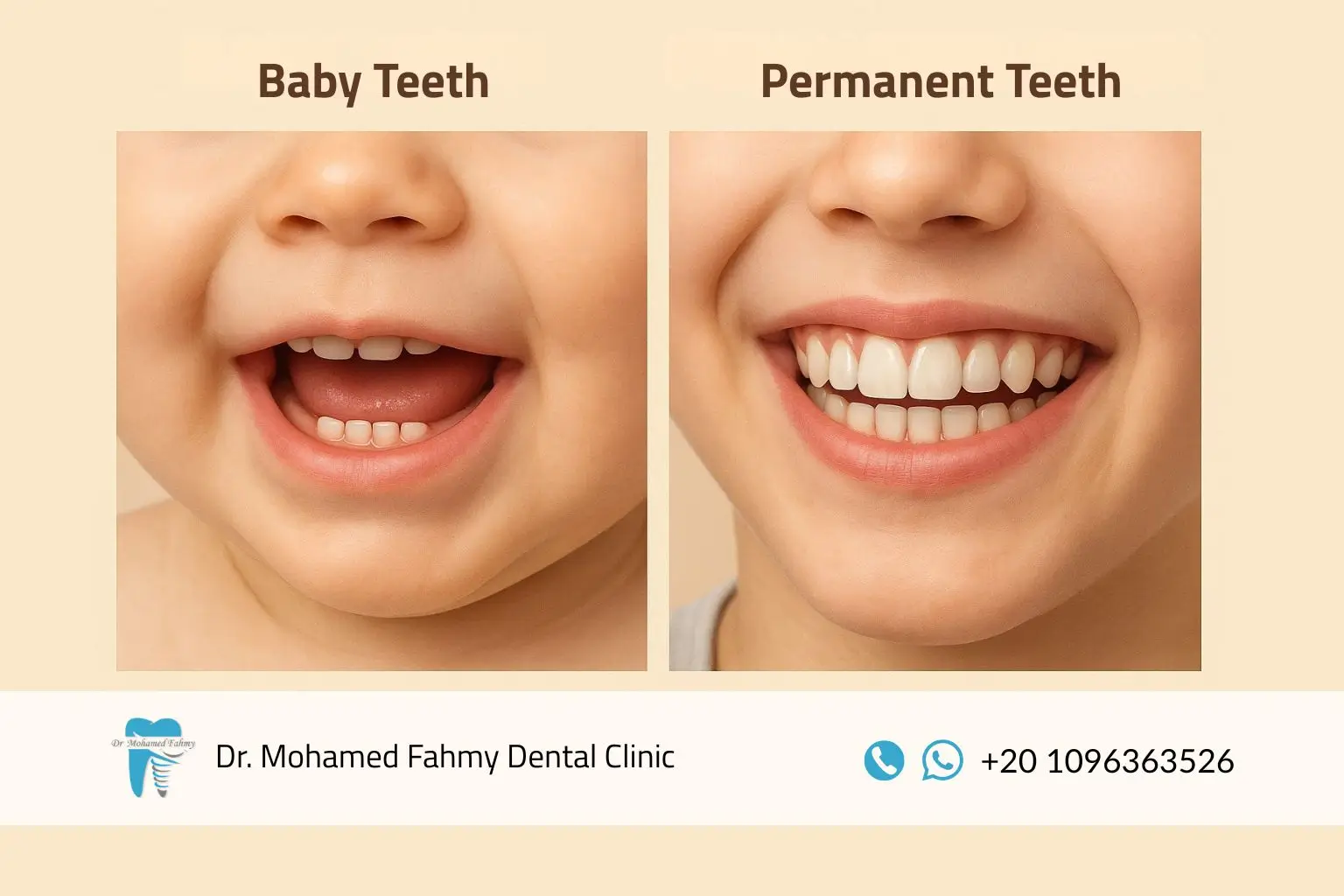
Difference Between Baby and Permanent Teeth
| Feature | Baby Teeth | Permanent Teeth |
| Color | Bright white | Slightly yellowish |
| Size | Smaller | Larger and longer |
| Roots | Short and resorbable | Long and stable |
| Enamel | Thinner, softer | Thicker, stronger |
| Total Count | 20 | 32 |
| Age Range | 6 months – 6 years | 6 years onward |
Permanent teeth appear slightly yellower and larger than baby teeth — a normal difference in enamel structure.
Why Dental Check-Ups Matter During Tooth Transition
Monitoring tooth eruption and replacement ensures proper alignment and prevents early decay.
At Dr. Mohamed Fahmy’s Dental Clinic, we provide:
- Comprehensive oral-growth assessments
- Panoramic X-rays to track developing teeth
- Fluoride and sealant protection
- Guidance for healthy diet and oral habits
A dental visit every six months helps detect issues early and maintain your child’s perfect smile.
Caring for Baby and Permanent Teeth
- Brush twice daily with fluoride toothpaste.
- Floss gently once a day.
- Limit sugary foods and sticky sweets.
- Encourage water intake and calcium-rich meals.
- Visit the dentist if you notice color changes or pain.
Remember: a healthy baby tooth paves the way for a strong permanent one.
Frequently Asked Questions
1. How many baby teeth do children have?
Twenty — ten in the upper jaw and ten in the lower.
2. How many permanent teeth do adults have?
Thirty-two in total, though most people have twenty-eight before wisdom teeth appear.
3. How many molars are in the mouth?
Eight baby molars; twelve in adults (including wisdom teeth).
4. When does the third molar appear?
Second baby molars erupt around age 2½; wisdom teeth erupt between ages 17–21.
5. Can permanent teeth be delayed?
Yes. Genetics, nutrition, or jaw space can delay eruption — a dental exam can identify the cause.
Conclusion
Understanding the number of baby and permanent teeth helps parents track oral growth and identify potential issues early.
Healthy teeth today mean a confident, radiant smile tomorrow.
At Dr. Mohamed Fahmy Dental Clinic in Giza, we offer comprehensive pediatric dental care, from first-tooth check-ups to full permanent-teeth assessments using advanced imaging and gentle, child-friendly techniques.
Book your child’s appointment today with Dr. Mohamed Fahmy and get a Free online follow-up consultation with Dr. Mohamed Fahmy after booking and completing the first visit.
Book through the website, contact us on WhatsApp, or call us
References
- American Dental Association (ADA) – Primary and Permanent Dentition Guide
- Cleveland Clinic – Baby Teeth and Permanent Teeth
- Mayo Clinic – Baby Teething Stages and Care
- Healthline – Baby Teeth Order: Dental Development
- WebMD – Dental Health and Your Child’s Teeth