Book Appointment Now
Permanent Teeth in Children | Complete Guide by Dr. Mohamed Fahmy
The appearance of permanent teeth in children marks an important milestone in oral development.
This stage signals the transition from baby (primary) teeth to the adult smile that will last a lifetime.
In this guide, we explain everything parents should know about permanent teeth in children, including when they appear, how to distinguish them from baby teeth, what to do if a permanent tooth is lost, and how to care for them from day one.
Table of Contents
What Are Permanent Teeth in Children?
Permanent teeth are the second set of teeth that replace baby (primary) teeth after they fall out.
They begin to erupt at around six years of age and continue to appear until early adolescence.
Adults have a full set of 32 permanent teeth, though children will typically have 28 before the wisdom teeth emerge later in life.
Baby teeth: 20
Permanent teeth: 32 (including 4 wisdom teeth that usually appear after age 17)
When Do Permanent Teeth in Children Start Appearing?
Most children begin the tooth-replacement phase at about six years old when the lower front baby teeth fall out and the first permanent teeth appear in their place.
The process continues gradually until about 12–13 years of age, when the permanent dentition is nearly complete.
Dentists refer to this as the mixed-dentition stage, when baby and permanent teeth coexist in the mouth.
Eruption Chart for Permanent Teeth in Children
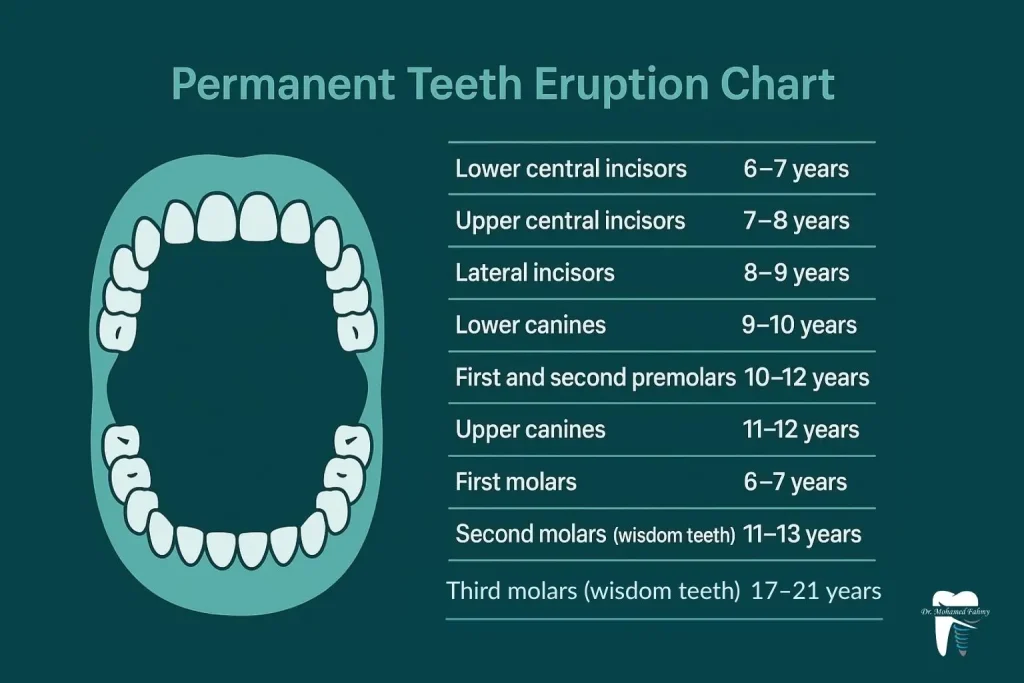
Below is an eruption chart for permanent teeth in children that shows the typical age ranges during which children lose their baby teeth and their larger, permanent teeth grow in to replace them.
| Tooth Type | Average Age of Eruption | Notes |
| Lower central incisors | 6 – 7 years | Usually the first permanent teeth |
| Upper central incisors | 7 – 8 years | May cause mild gum soreness |
| Lateral incisors | 8 – 9 years | Follow once baby teeth loosen |
| Lower canines | 9 – 10 years | Help align the dental arch |
| First and second premolars | 10 – 12 years | They replace the primary molars and play a role in grinding food. |
| Upper canines | 11 – 12 years | Sometimes require orthodontic guidance |
| First molars (“six-year molars”) | 6 – 7 years | Key teeth for proper bite alignment |
| Second molars | 11 – 13 years | Complete the child’s permanent dentition |
| Third molars (wisdom teeth) | 17 – 21 years | Appear in adulthood only |
The exact order of eruption of permanent teeth in children can vary slightly from one child to another and is influenced by genetics and nutrition.
How to Tell Baby Teeth from Permanent Teeth
Many parents wonder, “How can I tell if this tooth is baby or permanent?”
Below are clear differences to help you identify them:
| Feature | Baby Teeth | Permanent Teeth |
| Color | Bright white or bluish-white | Slightly yellowish |
| Size | Small and closely spaced | Larger and more rectangular |
| Texture | Smooth and glossy | Rougher at first, smooths with time |
| Edges | Rounded | Have small ridges (“mamelons”) that wear away naturally |
| Roots | Short and resorb easily | Long, firmly anchored roots |
| Age Range | 6 months – 6 years | 6 years onward |
When you look closely, a permanent tooth appears larger and a little yellower than the adjacent baby teeth — this is completely normal.
If a new tooth erupts behind or in front of the baby one, visit your dentist promptly. It could indicate crowding or misalignment that may need early orthodontic care.
Permanent Tooth Loss in Children – When It’s an Emergency
Only baby teeth are meant to fall out naturally.
If a permanent tooth comes out, it’s a dental emergency and needs urgent professional care.
Common Causes
- Direct trauma (fall, sports injury, or accident)
- Advanced gum infection or bone loss
- Deep decay or abscess around the root
- Abnormal bite pressure or orthodontic issues
What to Do if a Child Loses a Permanent Tooth
- Handle the tooth by the crown, not the root.
- Rinse gently with clean water — no scrubbing.
- Try to place it back into the socket carefully.
- If that’s not possible, keep it in a cup of milk or saline.
- See a dentist within 30 minutes for the best chance of saving it.
At Dr. Mohamed Fahmy Dental Clinic, we manage such emergencies with advanced re-implantation and stabilization techniques to preserve the natural tooth whenever possible.
Common Issues During Tooth Replacement
- Both baby and permanent teeth appear together (“double row”).
- Baby teeth that don’t fall out even after the permanent one erupts.
- Crowding or large gaps between new teeth.
- Weak enamel or early cavities in the new tooth.
- Slight yellow color of new teeth compared to baby ones — completely normal.
Regular check-ups every six months help monitor eruption and guide teeth into correct alignment.
Caring for Permanent Teeth from the Start
The first permanent molars, often called “six-year molars” are vital for the child’s bite and long-term dental health.
Because they erupt quietly behind baby teeth, they are often missed and become prone to decay.
Caring Tips
- Brush twice daily with fluoride toothpaste.
- Teach gentle flossing between teeth.
- Limit sticky sweets and sugary drinks.
- Visit the dentist twice a year for cleaning and fluoride application.
- Ask about sealants (protective coatings) for new molars to prevent decay.
- Treat small cavities immediately before they spread.
Preventive care in childhood builds strong, healthy teeth that last a lifetime.
Do Boys and Girls Develop Permanent Teeth at the Same Time?
There’s a small difference, girls typically develop slightly earlier than boys by about six months.
This variation is normal and related to overall growth rates.
Delayed eruption isn’t usually concerning unless accompanied by other growth or jaw problems.
When Should You Visit the Dentist?
Schedule a dental visit immediately if:
- Baby teeth haven’t fallen out by age 8.
- A new tooth appears misaligned or behind the old one.
- The new tooth changes color (gray or brown).
- Persistent gum bleeding or pain occurs.
- A permanent tooth is knocked out.
At Dr. Mohamed Fahmy Clinic in Giza, we provide specialized child dental check-ups and panoramic X-rays to monitor eruption patterns and jaw growth, ensuring healthy alignment and early detection of any issues.
Frequently Asked Questions
1. How can I tell if a new tooth is permanent?
It’s usually larger, slightly yellowish, and may have small ridges on the edge that fade over time.
2. When is the full set of permanent teeth complete?
Around ages 12–13, excluding wisdom teeth that erupt later.
3. Is it normal for permanent teeth to come in behind baby teeth?
Yes, but your dentist should check for spacing or crowding problems.
4. What should I do if my child loses a permanent tooth?
Keep it in milk or saline and see a dentist within 30 minutes — time is crucial.
5. Why are permanent teeth more yellow than baby teeth?
Natural enamel thickness and dentin color make them appear slightly yellower; this is completely normal.
Conclusion
Permanent teeth are a lifelong investment in your child’s health and confidence.
Every tooth that emerges today helps build the strong, beautiful smile of tomorrow.
At Dr. Mohamed Fahmy Dental Clinic in Giza, we monitor children’s oral development from the first tooth through the full eruption of permanent teeth, using modern imaging, preventive treatments, and a gentle child-friendly approach.
Book your child’s dental consultation today to ensure healthy, strong permanent teeth for life and get a Free online follow-up consultation with Dr. Mohamed Fahmy after booking and completing the first visit.
Book through the website, contact us on WhatsApp, or call us